My name is Wiingashk. It means sweetgrass. That’s the short answer to the meaning of Wiingashk: it’s the Ojibwe word for a fragrant native grass, and it’s the name I carry as a twenty-four-year-old Chippewa Cree man from Rocky Boy’s Indian Reservation in Montana.
Depending on who’s asking, that’s where the explanation ends. Two words, easy to hold onto. But I’ve learned that knowing what a word means and knowing what it carries are two different things.
Wiinged News is publishing this essay the week of Indigenous Peoples’ Day, Monday, October 12.
At a glance
| Name | Wiingashk |
| Meaning | Sweetgrass |
| Language | Ojibwe, the language of the Chippewa side of his family |
| Word parts | wiing-, fragrant, and -ashk, grass or stalk |
| The plant | Sweetgrass (Hierochloe odorata), a fragrant perennial grass of cool, wet meadows and stream banks |
| Why it smells sweet | Coumarin, a natural compound in the leaves |
| Home | Rocky Boy’s Indian Reservation, Bear Paw Mountains, north-central Montana |
| Nation | Chippewa Cree Tribe |
| Reservation established | September 7, 1916, by an Act of Congress |
What does Wiingashk mean?
Wiingashk is the Ojibwe word for sweetgrass. The Ojibwe People’s Dictionary breaks it into two parts: wiing-, meaning fragrant, and -ashk, meaning grass or stalk. The name describes the plant by its scent.
In Ojibwe, the language of the Chippewa side of my family, the word itself points to that fragrance. I find that beautiful, and not because it sounds ancient or mysterious. It shows how closely people were paying attention to the world around them.
Someone had to notice. Someone had to know the plant well enough to see what set it apart, and then somebody had to pass that knowledge on.
What a name carries
I work in media, I think a lot about business, and I spend more time than I probably should imagining things that don’t exist yet. But my name comes from a language that was spoken long before Montana was Montana, long before the borders on our maps, and it asks me to think about more than myself.
For most people a name is a name. Mine tends to turn into a conversation, and I don’t mind that.
When I tell someone Wiingashk means sweetgrass, I’ve told them something true. I just haven’t told them much.
What is sweetgrass, and why does it smell so sweet?
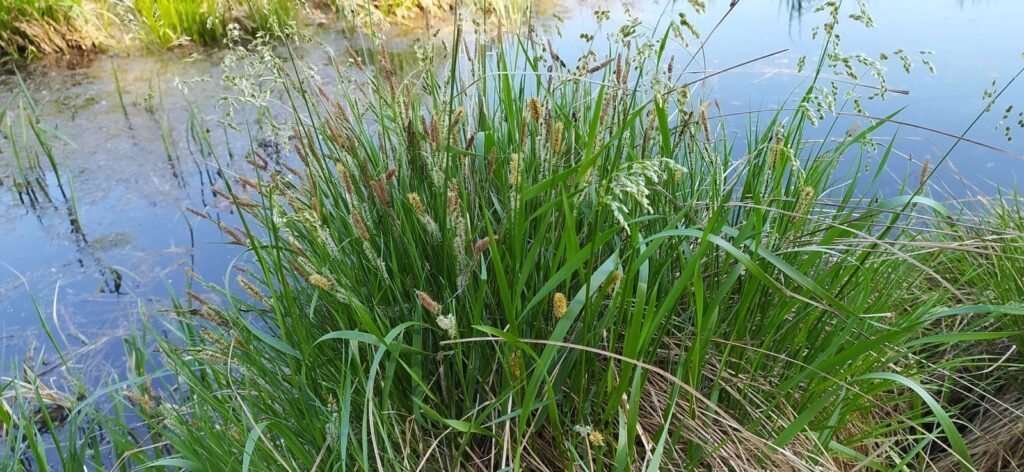
Sweetgrass is a fragrant perennial grass native to the cooler parts of North America and Eurasia. Its sweet, vanilla-like scent comes from coumarin, a natural compound, and the fragrance develops as the cut grass dries, according to the U.S. Department of Agriculture.
Sweetgrass has a smell you don’t forget once you’ve learned it. Warm and clean, a little like vanilla, though that comparison never gets it right. Underneath the sweetness there’s something earthy, like fields and water and the air after the weather changes.
Science can explain part of that. But it can’t fully explain what a plant means to people who have lived alongside it for generations.
The meaning of sweetgrass across Indigenous nations
Among many Indigenous nations, sweetgrass has cultural and ceremonial importance. It’s gathered, braided, woven into baskets, and used in prayer and in moments of gratitude and reflection. But the teachings aren’t the same everywhere, and nations, communities, families, and knowledge keepers all understand it in their own ways.
That matters, because people sometimes talk about Native traditions as if every Indigenous person inherited the same beliefs, the same ceremonies, the same relationship to nature. We didn’t. There is no single Native American culture.
My Chippewa heritage isn’t interchangeable with my Cree heritage, and neither one speaks for a Lakota, Blackfeet, Navajo, or Haudenosaunee person. Our histories overlap in places, and we share some struggles and values, but the differences deserve as much respect as the similarities.
At some point a name is just something you’re given. Eventually it becomes something you have to grow into.
Where is Rocky Boy’s Indian Reservation?
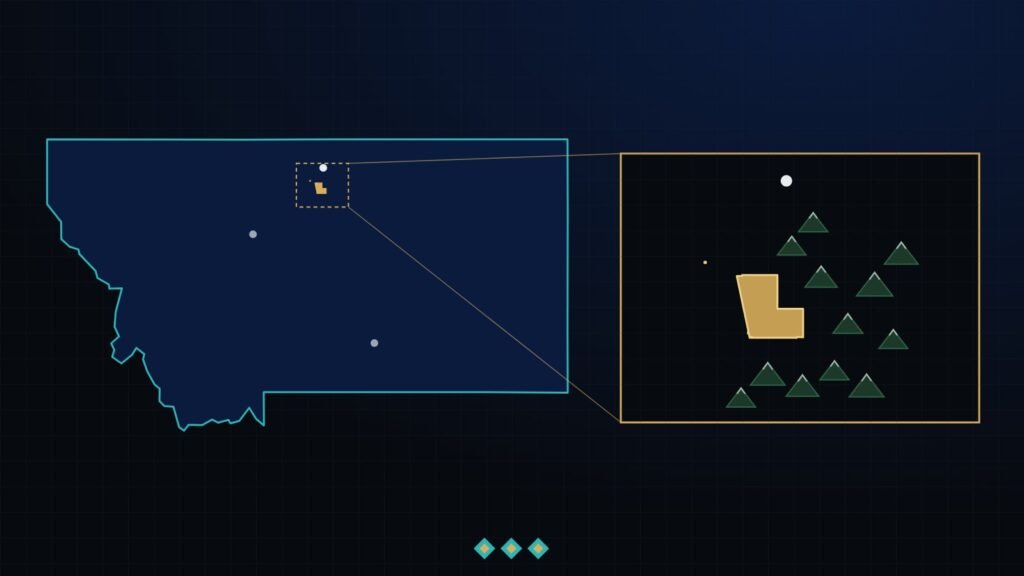
Rocky Boy’s Indian Reservation is the home of the Chippewa Cree Tribe, in the Bear Paw Mountains of north-central Montana. Congress established it on September 7, 1916, and it was the last reservation created in Montana, according to Stone Child College, the tribal college on the reservation.
For people who’ve never been there, the word “reservation” brings up certain pictures. Some imagine isolation or poverty.
Others imagine a romantic version where everything is traditional and everyone lives close to the land. Neither one is right.
Rocky Boy is a real community. People work, raise kids, argue about things that matter and things that don’t, look after their relatives, and worry about the future.
There’s humor there, and ambition, and people with real talent who may never get the recognition they deserve. There are serious challenges too. But I’ve never liked the idea that a community’s difficulties should be the only thing outsiders know about it. A place isn’t the sum of its problems.
Related from Wiinged News: what the new Good Life Lodge youth center means for Rocky Boy’s.
A history older than the boundary
The Chippewa Cree Tribe brings together two related but distinct peoples whose histories stretch across the northern plains, the Great Lakes region, and what is now Canada. Our history includes movement, hardship, political struggle, and the determination of families who wanted a place to stay together.
The reservation was established in 1916. That date matters, but it isn’t where our history begins. The people were here before there was a reservation, and their identities didn’t start when a government drew a boundary.
Still, home matters to me. There’s something steadying about knowing a place held stories before you were born and will keep holding them after you’re gone.
That kind of belonging has nothing to do with owning anything. It’s a relationship.
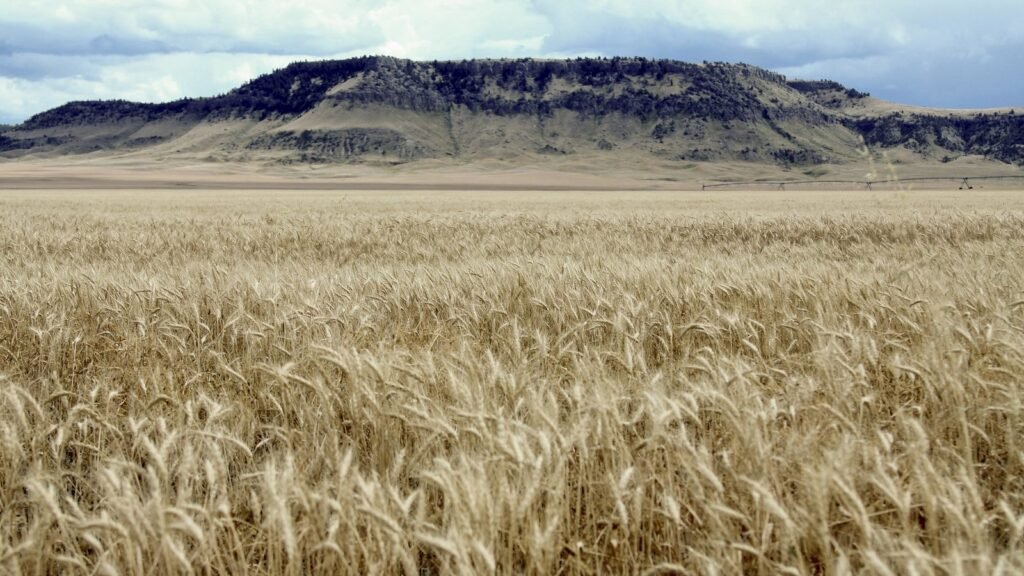
The mountains don’t need me to explain them. The land isn’t a prop in my story. It has its own history, and I happen to be part of it.
Wiingashk Courchane
Why is it called Rocky Boy’s?
The name Rocky Boy comes from an English rendering of the name of a Chippewa leader, often explained as meaning Stone Child. Stone Child College notes that some consider Stone Child the better translation.
In media, translation is usually treated as a practical problem. But words do more than label things. Sometimes the literal meaning makes it across but the feeling doesn’t, and sometimes an unfamiliar word gets treated as an inconvenience when it was carrying knowledge the whole time.
The names on maps aren’t always faithful to the words and people they came from. They get misheard, written down by people who didn’t understand them, and repeated until the new versions feel permanent.
There’s power in naming things. Governments name roads, companies name products, explorers named places that already had names. A name can show respect, and it can also be a way of claiming authority.
What if you get my name wrong?
If you ask what my name means, I’ll tell you. If you ask how to say it, I’ll help. If you get it wrong while honestly trying, that’s fine.
I’m not making a political statement every time I say my name. Half the time I’m just ordering coffee.
But I can make an introduction easier for someone without making myself smaller. What matters is understanding that something unfamiliar to you doesn’t automatically need to be changed. A lot of respect starts with learning someone’s name.
What sweetgrass teaches about attention
One thing I like about sweetgrass is that it doesn’t look like much. It’s grass, with long narrow leaves, and if you didn’t know what you were looking at you could walk right past it looking for something more dramatic.
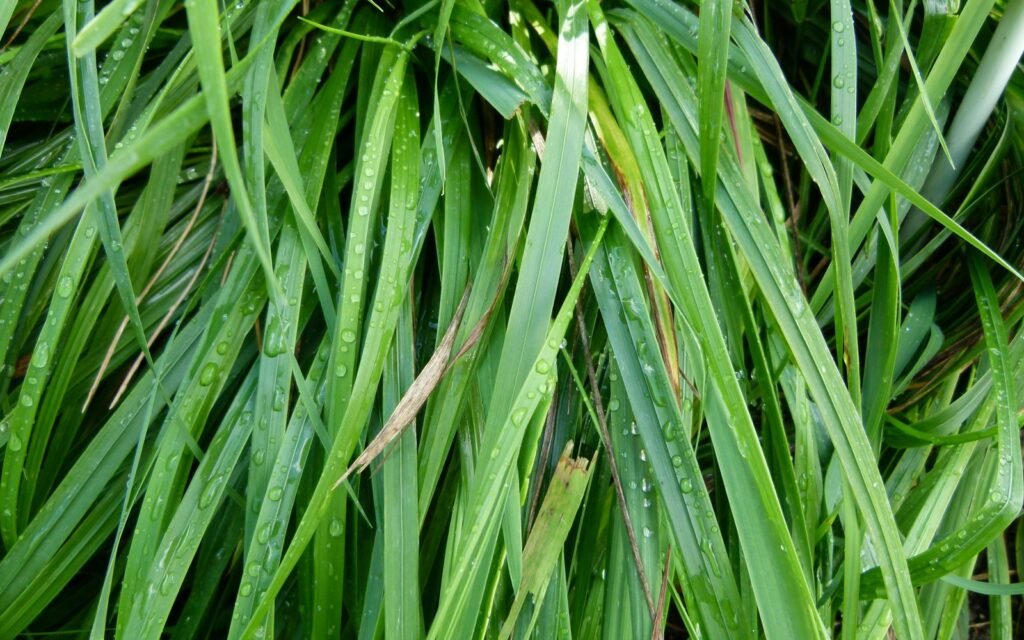
That feels like a lesson. We live in a world that keeps telling us importance has to be visible, and everything has to announce itself.
I work in media, so I’m not innocent here. I understand the pull of a good image or a story that grabs people. But attention and value aren’t the same thing.
Sweetgrass didn’t become meaningful when someone recognized it. It already was.
I do want to build things that matter, and that ambition is real. I want to see Native young people walk into rooms where our communities have usually been overlooked. I want ideas to become businesses, stories to become productions, and creative people to get the resources to develop what they can do.
The world doesn’t need one more person announcing he’s going to do important things. It needs people who do the work, and the most meaningful work usually happens when almost nobody is watching.
Is the Chippewa language still spoken at Rocky Boy’s?
Only by a few people. At Rocky Boy’s, Cree remains especially important to the community, while the Chippewa language has very few fluent speakers left. A 2020 survey by the Mahchiwminahnahtik Chippewa Cree Language Revitalization program estimated that fewer than 1% of about 7,000 enrolled tribal members were fluent first-language Cree speakers, and 0.2% were fluent Chippewa speakers.
My name comes from Ojibwe, and I belong to a community shaped by both Chippewa and Cree history. Both of those are true at once.
Many Indigenous languages haven’t been passed down the way they should have been, and there are historical reasons for that. For generations, government policy and institutions tried to assimilate Native people into a society that treated our languages as obstacles to progress.
Children were taken from their communities and many were punished for speaking the languages they knew. Families were split up and cultural practices were discouraged or banned.
The damage didn’t end when individual policies changed. A language lives in relationships, and relationships take time to rebuild.
There’s something painful about carrying a word from a language you can’t speak as well as you’d like. It can feel like holding a key without knowing every door it used to open. But I don’t think shame helps. Curiosity does, and so does learning, and so does supporting the fluent speakers, the teachers, and the young people who want to learn.
Who keeps a language alive?
A language survives because someone speaks it. A story survives because one person remembers it and another takes the time to listen. A skill survives because somebody practices it, makes mistakes, gets corrected, and eventually can teach it.
Admiration alone doesn’t keep a culture alive. It takes participation, and it takes people.
A living language should be able to belong to the world young people actually live in. I want to hear Indigenous languages in films and animation, on the radio, in songs, in classrooms and workplaces, and in the ordinary conversations that fill a day.
Our languages should be able to describe the future as well as they carry the past.
What does it mean to be Chippewa Cree today?
Being Native isn’t a performance. It’s not a look, or a way of dressing, or a set of behaviors someone else expects from you, and it doesn’t become less real because you take part in modern life.
I can be into business and still be Chippewa Cree. I can admire great athletes, follow motorsport, like technology, listen to current music, or spend a whole evening on a creative project.
None of that costs me anything about where I come from. But if we embrace tradition, we get treated like relics, and if we embrace modern life, someone asks whether we’re traditional enough.
My identity doesn’t have to be frozen in some earlier century to be legitimate. Culture changes because people are alive. Our ancestors adapted constantly, learned new skills, met new technologies, made hard decisions, and kept going through enormous disruption. Adapting isn’t the same as abandoning.

I’d never want a young Native person to feel they have to choose between honoring their heritage and exploring everything else the world has to offer. I want them to have both.
To learn their language and study engineering. To take part in traditions and start companies. To make films, write software, record music, become doctors, race cars, write books, and chase opportunities none of us have thought of yet.
I don’t believe our ancestors survived what they did so their descendants could live smaller lives.
Why Native storytelling matters: being seen versus being heard
Being seen is not the same as being heard. Native people have been visible in American culture for a long time, in paintings, ads, textbooks, movies, and sports logos, but being seen doesn’t mean being understood.
I think about stories a lot, partly because of my work with Rocky Boy Media & Arts and KHEW FM, and partly because I’m fascinated by how a voice can reach someone you’ll never meet. A person sits in a studio, talks into a microphone, and ends up in someone else’s day. You don’t know what they need, but your voice gets to them, and that’s an opportunity and a responsibility.
For a long time other people decided which Native stories were worth telling and how they should end. Having your image used and having your voice respected are not the same.
I want Native people to have the means to make, distribute, and own our stories. Not every story has to be about hardship. Not every Native character has to be wise, tragic, spiritual, or heroic.
Sometimes I want to see one who’s funny, or awkward, or stubborn, who makes bad decisions and has to live with them. A full human being. That shouldn’t be a radical thing to ask for.

I’ve thought about developing animated stories inspired by Cree culture and language, with original characters that could reach young audiences. I want to make stories kids actually love, with humor, adventure, and characters they remember.
Stories where Native children can see something of themselves without every scene turning into a lesson about identity, and where other kids can enjoy the world without treating it as strange or exotic.
Related from Wiinged News: why Indigenous representation on screen matters, and what shows like Molly of Denali got right.
What sweetgrass teaches about business and giving back
When we take, what do we give back? In different Indigenous traditions, gathering plants comes with teachings about respect, gratitude, and restraint, and about what people owe the places that sustain them.
Those teachings belong to their own communities. But the question underneath them applies to almost everything.
I think more people in business should ask it. We talk constantly about growth: more customers, more revenue, more attention. There’s nothing wrong with wanting to grow, and I do. But growth isn’t the same as contribution.
A company can profit from a culture without creating opportunities for the people it came from. I don’t want to build like that. If a project draws its identity from Indigenous communities, those communities should have a real chance to help shape it and share in what it earns.
If we’re encouraging young people toward creative careers, we should also think about the equipment, training, connections, and money they need. Telling someone they’re talented is great. Helping them get the tools is better.
I do think “what do we give back?” deserves a permanent place in how we define success, and that’s the idea behind a creative economy that keeps value at home.
Sweetgrass isn’t a business model. It’s a living plant. Respecting it probably starts with letting it stay one, and not turning every cultural meaning into something we can use.
Why some teachings stay private
Not every teaching is meant for a general audience. Not every ceremony should be photographed, not every sacred object belongs in a display case, and not every story is ours to repeat.
There’s pressure on young Indigenous people to sound certain about who they are, and to speak for far more people than any one person could. I know who I am, but that doesn’t mean I know everything about the people I come from.
Some traditions I’d rather learn from people who have spent their lives practicing them. Some experiences belong to other Indigenous nations, and I’d rather hear them described by those nations’ own people. Sometimes the most respectful thing you can say is that you’re still learning.
I’d rather be a young man who asks good questions than one who mistakes confidence for understanding.
The internet has created a huge appetite for information without the same understanding of responsibility. A ceremony becomes an “experience,” and a teaching becomes content. Often people are just curious, or they admire what they see. But admiration doesn’t give anyone permission, and curiosity doesn’t create entitlement.
I can tell you what my name means and what it makes me think about. But I don’t have to turn sacred knowledge into a public performance to prove my culture matters. There’s dignity in respecting a boundary.
When something is kept from public view, that doesn’t always mean secrecy or exclusion. Sometimes it’s care.
What I want the next generation to inherit
When I think about the future of Indigenous culture, I don’t picture a museum. I picture people.
I picture a young person hearing their language somewhere they never expected to. A kid watching an animated story and recognizing something familiar in the characters without anyone having to explain why it matters. Young musicians recording original work in studios they can actually afford to use.
I picture Native-owned businesses creating jobs and building wealth, so more families can choose where and how they want to live. And elders being listened to while they’re still here, and not only honored after they’re gone.
Preserving something and keeping it alive aren’t the same. The question isn’t whether things will change.
They will. The question is whether we can make room for that change without giving up the relationships, knowledge, and responsibilities that make us who we are.
Through media and creative work, I want to help Native people tell stories in their own voices. Through business, I want to help make those opportunities last.
I hope they understand they’re allowed to become extraordinary without first becoming someone else.
Carrying versus owning: what sweetgrass roots teach
Sweetgrass spreads through white underground stems called rhizomes. What you see above the ground isn’t the whole plant. Beneath the surface there’s a living structure that lets it spread and come back, as the USDA’s growing guide describes.
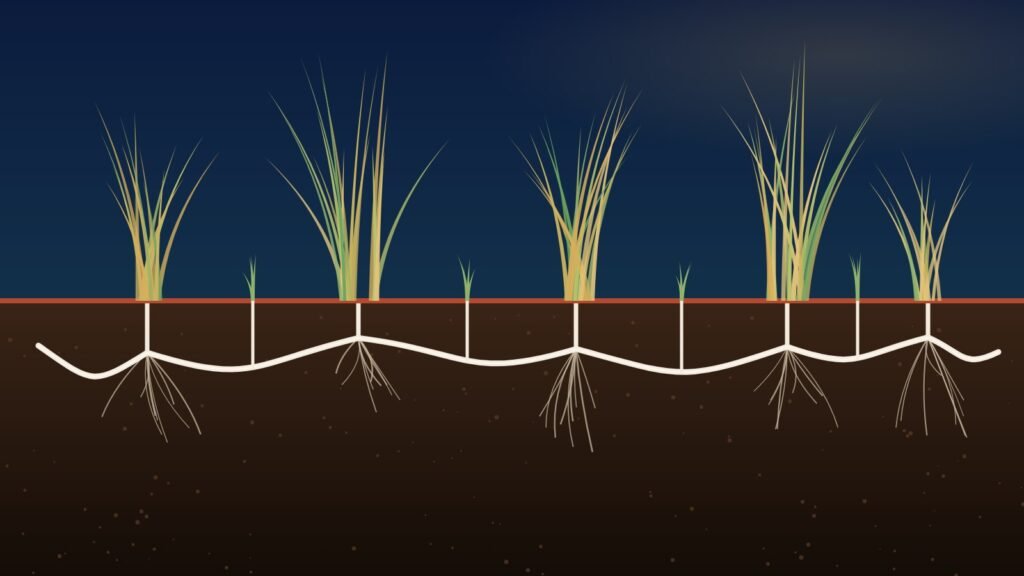
I don’t want to pretend nature arranged itself to give me metaphors. Still, I think about the things that hold us up without being visible. Family histories.
Language. Relationships. The work of people whose names we may never know, and the hard decisions earlier generations made because they wanted their children and grandchildren to have a future.
It’s tempting to believe your story starts with your own decisions. Individual effort matters, but it’s never the whole truth. Nobody starts from nothing.
I didn’t invent the word Wiingashk. I didn’t create the language it belongs to, or the community whose history is part of mine. All of that was here before me, and I’ve been given the chance to carry some of it forward.
When you think you own something, you start by asking what you can do with it. When you know you’re carrying it, you start by asking what you owe it.
I don’t want to claim every Indigenous person sees life this way. We don’t. But Wiingashk belongs to a language.
That language belongs to a people. And I belong to a history much bigger than my own life.
Say my name
Part of me wishes I could explain all of this in one sentence. But maybe names aren’t supposed to reveal everything at once, and their meanings get clearer through the lives we live.
When I was younger, I understood my name as something that set me apart. Now I’m starting to understand it as something that connects me.
To the Chippewa side of my family. To the Cree community that’s also part of who I am.
To Rocky Boy and the people who give that place its meaning. To a language that deserves to be spoken.
Sweetgrass keeps its fragrance after it’s been gathered and dried. Something of it lingers. I don’t know what’s ahead, but I hope what I do leaves something worthwhile behind: a project that lasts, or a story that reaches a kid who needs it.
I don’t have to carry all of history on my shoulders. I have to carry my part with care.
So if we meet someday and you ask what my name means, I’ll probably smile and give you the short answer. Sweetgrass. But a translation can tell you what a word means.
It can’t tell you everything about the people who kept that word alive, or the place someone calls home, or the person standing in front of you. For that, you have to take the time to know him.
My name is Wiingashk. And I’m still learning everything it means to carry it.
Get to know Wiingashk
Read Wiingashk Courchane’s story, the work he’s building through Rocky Boy Media & Arts, and how to reach him, on WiingCourchane.com.
Wiingashk Courchane is a Chippewa Cree media executive from Rocky Boy’s Indian Reservation in Montana. He is President of Rocky Boy Media & Arts Inc. and is involved with KHEW FM. His interests include Indigenous storytelling, entrepreneurship, and creating opportunities for the next generation of Native artists and leaders.
Sources
- Ojibwe People’s Dictionary, wiingashk, University of Minnesota.
- U.S. Department of Agriculture, Natural Resources Conservation Service, Sweetgrass fact sheet and Sweetgrass collection, propagation, and harvest.
- Stone Child College, The Chippewa Cree Tribe.
- Mahchiwminahnahtik Chippewa Cree Language Revitalization, language survey, July 2020.
- U.S. Department of the Interior, Federal Indian Boarding School Initiative.